3.14

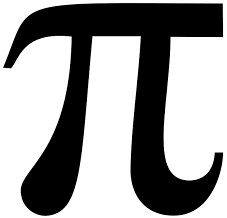
Today is one of those confusing days — it’s Pi Day, but it’s not about pies, it’s about the most studied number in mathematics. Even if you’re not aware of it, the number pi is fundamental to our understanding of geometry and is a vital part of architecture and construction of all sorts of things like arches and bridges — even the Pyramids.

Pi Day is celebrated internationally on March 14 and is observed by math enthusiasts and schools all over the world. The first Pi Day celebration was held at the San Francisco Exploratorium in 1988, with the staff, and public, marching in circles and then consuming fruit pies. The Massachusetts Institute of Technology often mails its acceptance (and rejection) letters to be delivered to prospective students on Pi Day.

Throughout history, there has been a lot of effort to determine pi more accurately and to understand its nature. Pi’s decimal representation never ends or repeats. Pi is an irrational number, meaning that it cannot be written as the ratio of two integers. It is also a transcendental number, meaning that there is no polynomial with rational coefficients for which pi is a root. The implication is that virtually any string of numbers you can imagine is somewhere in pi. And I guess it’s just inevitable that March 14 is the birthday of the Nobel Prize winning scientist Albert Einstein.

Lots of things can be said about Pi….
The symbol for pi was introduced by William Jones, a Welsh mathematician in 1706.
Since the exact value of pi can never be calculated, we can never find the totally accurate area or circumference of a circle.

Pi is actually a part of Egyptian mythology. People in Egypt believed that the pyramids of Giza were built on the principles of pi. The vertical height of the pyramids have the same relationship with the perimeter of their base as the relationship between a circle’s radius and its circumference. The pyramids are one of the seven wonders of the world.

Pi wasn’t always known as pi. Before the 1700s, people referred to the number we know as pi as “the quantity which when the diameter is multiplied by it, yields the circumference.” Thank goodness someone came up with pi.
Givenchy sells a men’s cologne with the name PI. The company markets the product as capable of enhancing the attractiveness of intelligent and visionary men.
March 14 or 3/14 is celebrated as Pi Day because 3.14 are the first digits of pi.

As I’ve mention in previous posts, in recent years, Pi’s usefulness has been challenged in recent years. A growing number believe that tau (which amounts to 2π) is better suited to circle calculations. For example, you can multiply tau with the radius of a circle to calculate its circumference more intuitively. But Pi is loved by a lot of math enthusiasts and we’ll probably continue to celebrate it. After all, I can’t Imagine you favorite Pizza place having a Pizza Tau Day special instead of a Pizza Pi Day special…. 
— 30 —

Posted in Uncategorized | Leave a comment

Spring Ahead

It’s that time again — the beginning of daylight saving time. In the United States, daylight saving time lasts for a total of 34 weeks, running from early to mid March to the beginning of November. 
This year, daylight saving time will starts on March 13 — more than a full week before the official start of spring. Daylight saving time will end on November 6.

Under the conditions of the Energy Policy Act of 2005, daylight saving time starts on the second Sunday in March and ends on the first Sunday in November. Prior to passage of that Energy Policy Act, the clocks had sprung ahead on the first Sunday in April and remained that way until the final Sunday in October. The entire United States observes daylight saving time with the exception of Hawaii and a part of Arizona (Northeast Arizona (Navajo Nation) does not use DST.)

The time shift means we lose an hour of sleep, but we’ll enjoy more evening light for the next eight months.

A lot of people are saying, what if we advanced the clocks this weekend and never had to turn them back? That idea is gaining some traction and a bill has been reintroduced in Congress that would eliminate standard time and keep daylight saving time year-round. 
Florida’s state legislature actually passed its own version of the bill in 2018 — however, individual states aren’t permitted to change their DST schedules without federal approval from the Department of Transportation, which means an act of Congress is required.

The US first introduced daylight saving time in 1918, two years after Germany and other European countries started advancing the clocks to conserve fuel and energy during World War I. Congress abolished the practice after the war and it wasn’t used again nationwide until President Roosevelt introduced year-round DST during World War II from 1942 to 1945.
During the energy crisis in the 1970s, the United States experimented with year-round DST from January 1974 to October 1975. Since then, we’ve switched the clocks back to standard time during the winter months.

Critics of the current DST schedule argue that changing the clocks twice a year disrupts sleep schedules, increases car accidents and the risk of heart attacks, seasonal depression and other health issues. Critics of the current system say using  DST year-round would improve our society’s health, as we wouldn’t have to adjust our clocks and sleep schedules, and more evening light during the winter months would give people extra time to exercise outdoors after work, as well as benefit the economy. 

Of course, making daylight saving time permanent doesn’t actually provide more sunlight. Because of the Earth’s tilt, the sun spends less time above the horizon during the winter and that means we have shorter daylight hours. Year-round DST would only shift daylight from the morning to the evening, meaning the sun would set an hour later than we’re used to from November to March. Naturally, the drawback is that mornings would be noticeably darker from November to March. A lot of parents and teachers oppose the idea of darker winter mornings, saying it could put children’s safety at risk.

So if we keep it like it is some people won’t be happy. If we change to year-round standard time some people won’t be happy. If we change to year-round daylight saving time, some people won’t be happy. I guess it’s true that you can make some of the people happy some of the time, but you can’t make all the people happy all of the time.
— 30 —

Posted in Uncategorized | Leave a comment

Square Earth

I don’t know about you, but it seems to me that it’s impossible to read the news on any given day without running across an article about some conspiracy. Personally, I’m becoming skeptical of just about everything.

I really thought we’d put to bed the debate as to whether or not the Earth was round or flat. Some people think it’s round and some people think it’s flat. I’ve even seen some recommendations that we teach both theories in schools and let the kids make their own decision on the shape of the Earth. 

Well, I was just about to throw in the towel, and say, “why not?” Give kids the option — if they’d rather live on a flat Earth than a round Earth, what’s it to me? If they don’t want to venture too far away from home for fear of falling off the edge, I’m ok with them staying put. 

But as a public service, I think I should tell you that there is an organization that makes compelling arguments that the Earth is not round or merely flat. The organization that I’m talking about is The International Square Earth Society. As you may have guessed, this society is convinced it can prove the Earth is square.

Even within the “flat Earth” community, most or many believe believe that the flat Earth has curved edges. Even the founder of the International Flat Earth Society, Charles K. Johnson, made the error of assuming that the Earth was shaped like a circular disk. Of course nothing could be further from the truth according to the Square Earth people.

Much of the Square Earth Society’s reasoning is based on the Biblical facts and they claim that every good Biblical literalist knows all the Scriptural passages which demonstrate that the Earth does not move and that its surface is not curved. The Book of Revelation, chapter 7, verse 1, makes the following unmistakable statement about the shape of the Earth: “After this I saw four angels standing at the four corners of the earth, holding back the four winds of the earth to prevent any wind from blowing on the land or on the sea or on any tree.

That sure seems to make a good case for the Earth not being round. But the Square Earth Society offers many, many passages in the Bible supporting the argument that the Earth is really square, like: Daniel 4:10-11, Matthew 4:8, Joshua 10:12, Chronicles 16:30. Psalms 93: & 96:10& 104:5, Isaiah 45:18 and (as the society says) the list goes on and on. 

Now — if all those Bible verses aren’t enough to convince you, the Square Earth Society asks you to consider this: (I am not making this up.) 
“Of all the nations on Earth today, God most loves the United States of America. (This is evident from songs like “God Bless America,” and from the fact that Pat Robertson, God’s  chosen spokesman, lives in the U.S.) America’s national pastime is the game of baseball. Baseball is played on a “diamond,” which is perfectly square in shape — and which, I might add, has its corners oriented to point toward the four compass points. God would not have made baseball into the national pastime of His favorite nation if He didn’t have a higher purpose in mind for it. Clearly, His higher purpose is to show us the True shape of the Earth. The Earth must be perfectly square, just like the diamond shaped field in God’s Chosen Sport is square.”

More evidence for the God/Baseball/Square-Earth connection can be found in the shape of the base bags, which are also perfectly square and oriented with their corners facing the same compass points that the diamond as a whole does, and in the fact that baseball’s most sacred ritual is called the World Series. And lest you doubt that Baseball is a divinely inspired game, I remind you that Charley McDowell has noted that the 90-foot distance between home plate and first base, which is just the right distance to make the game exciting, “was a pick from heaven.”

But wait! There’s more….
Take a gander at this passage from First Samuel:
“He raiseth up the poor out of the dust, and lifted up the beggar from the dunghill, to set them among princes, and to make them inherit the throne of glory: for the pillars of the earth are the LORD’s, and he hath set the world upon them”
~ 1 Samuel 2:8

This clearly shows that the Earth rests on an unspecified number of pillars. (A couple of translations of the Old Testament floating around say “foundations” or “fixtures” in place of pillars, but the original Hebrew word that appears here is “Matsuwq,” which literally means a cast metal support, a pillar, or a column.) What the pillars are resting on is unknown. They might not be resting on anything. Perhaps they are being held up by devine grace. Perhaps they are infinitely tall. All we know for sure is that a set of pillars beneath the Earth must exist.
This means that Hell, which is under the Earth, is interrupted by pillars in some places. This may explain how Satan is going to break out of Hell after the thousand years of peace in Revelation…..
Wow! Talk about a compelling argument!

There have been many many attempts to disprove the facts laid out by the Square Earth Society, but they have answers for them all. I don’t have time, or room, here to list them all, but I think it’s worthwhile to show an example of the many futile attempts to discredit this theory. Many people have challenged the theory by asking, “What about Isaiah 40:22?” (Isaiah, chapter 40, verse 22 reads: “He sits enthroned above the circle of the earth, an its people are like grasshoppers. He stretches out the heavens like a canopy, and spreads them out like a tent to live in.”)

The Square Earth Society responded: “Does this mean the Earth is circular? Not at all. If it were circular, Job’s mention of the ends of the Earth would be meaningless. The word translated as “circle” in this verse is the Hebrew “Chuwg,” which can mean circle, but can also mean circuit or compass. When occurring by itself, this word can also mean the vault of the heavens. This verse probably refers to the fact that God sits enthroned above the vault of the heavens, which encompasses the whole Earth. Beside, everyone knows that tents are supposed to be square.”
I just don’t know what to say — the Square Earth Society seems to have the answer to any counter argument presented….
I think I’ve done my duty by bringing this most import subject to your attention….
— 30 —

Posted in Uncategorized | Leave a comment

Number Please

This month there are two “Phone Days.” Well, actually, only one day, but two separate, but related subjects. March 10 is International Find a Phone Booth Day and National Landline Day. Both events celebrate telephones that are, or soon will become, a “thing of the past.”

Well of course that got me to thinking about telephones.
Today, if we want to talk to someone that isn’t standing right beside us (sometimes even if they are right beside us) we call them on our mobil phone or send them a text. 

When I was young, things didn’t work that way. When I was young, there was a telephone booth on just about every corner. I remember in Maysville, we had a pay phone attached to a pole downtown. these phones looked like big black boxes, with slots at the top for nickels, dimes and quarters. They had a rotary dial and a slot at the bottom where money could be returned to the caller. The phones only accepted coins — you couldn’t use paper money.

You had to know everyone’s telephone number, or look it up in a phone book. There was usually a big phone book hanging by a chain on the pay phone — they were usually torn and dirty because they were used by everyone.

If you didn’t have money, you could “call collect.” You’d place a call through the operator who, in turn, asked the person on the receiving end whether he or she would accept the charge. A lot of people used the “call collect” method of letting someone know they’d arrived at their destination. If that was the plan, the collect call would be rejected — it was a good way to indicate that someone had arrived safely without the cost of a call.

When I was a kid I remember going from pay phone to pay phone to see if someone had left money in the coin return slot.
Of course today, telephone booths and pay phones are quickly fading away. I’ve been told there are several phone booths in our area, but I don’t remember seeing them. For me, telephone booths are one of the things that bring back memories. If I could find one, and I had the room, I’d like to have one in my office. 

But as long as pay phones and telephones still exist and for those of us who still have land line phones at home — it’s a day to celebrate.
— 30 —

Posted in Uncategorized | Leave a comment

Not As They Seem….

Back in the early 70s we were living in Manila in the Philippines. We lived in an apartment Building downtown — right on Manila Bay and from our balcony we could see what looked like a very nice motel, pretty much right out behind our apartment building. It always looked like it was well maintained and the grass and trees were always cut and trimmed. It was laid out in a “U” and all the rooms were located above a covered area where the cars could be parked. It seemed like there were always cars there so it appeared to be doing a good business.

A friend of ours was stationed at Clark Air Force Base, about 50 miles from Manila, but the road between Manila and Clark wasn’t the best and the trip often took several hours. Our friend was going on a trip to a neighboring country to install some equipment and his flight was out of Manila International Airport early one morning. Since it was an early morning flight I told him he should come down the day before and stay with us and I could take him to the airport to catch his flight. He thought staying in Manila overnight was a good idea, but he said he didn’t want to stay with anyone — he’d just stay in a hotel. 

I suggested if he didn’t stay with us he stay at the nice little motel very near out apartment and then I could just pick him up in the morning and take him to the airport. He thought that was a pretty good idea and he came to Manila the day before his flight. That afternoon, I drove him over to the motel so he could check in and then we were going to go out to dinner that night. We drove to the motel and went into the office — the clerk was very friendly and asked how he could help us. Our friend said that he need a room. The hotel clerk asked for how long and our friend said, “just one night.” The hotel clerk’s eyes grew wide and he asked, “ALL night?” 
Our friend stayed in our extra bedroom that night. Things are not always what they seem…..
— 30 —

Posted in Uncategorized | Leave a comment

Keep On Truckin

When I turned on the news this morning, I expected hear the latest updates on Ukraine, but the story was the trucks coming to Washington. Most of us have been focused on Ukraine lately, but apparently there’s another war — right here in our own backyard. The news station interviewed someone by the name of Bob Bolus (from Pennsylvania, I think) — He said, “We’re going to put a stranglehold on D.C. They don’t have enough cops, enough people to stop us. We’re going to shut the Beltway down.” 

Of course, the first thing that came to my mind is that the Beltway is pretty much “shut down” every day — during rush hour. But what I really wondered, was, what is this group fighting for? I gather it’s a continuation of the “protest” in Canada. If I understood correctly, the Canadians started out angry about mask and vaccine mandates. Then they began talking about a wealth gap, government overreach, Confederates, Nazis, and then Trump 2024 flags popped up.

But back to Bob Bolus — he said he’s mad at Nancy Pilosi’s Gestapo and that wacko mayor of D.C. His people are unified, invincible, standing up fighting. Even after his explanation, the details of what they’re fighting for, escapes me.

Later in the newscast, another trucker, Brian Brase said, “A lot of people have asked why we’re doing this — what’s the reason behind it. People want a defined, clear answer. They think it’s one thing. The truth is, it’s about my children. It’s about my future grandchildren. It’s about our families. It’s about our country. It’s about letting our government know that you work for us.” 
Well, after listening to Bolus’s reasons, Brian’s explanation certainly cleared it up for me….

The list of things that are concerning to me and I’m paying attention to is pretty long — but here we are spending resources, money and energy on these convoys….. because their “grievances” and non-specific demands haven’t been met? 
— 30 —

Posted in Uncategorized | Leave a comment

Cinco de Marcho

We all know about Cinco de Mayo on the 5th of May, but March also has a pretty cool holiday (even if it is unofficial or made-up) known as Cinco de Marcho. This holiday has been around since 2007 and is celebrated annually on March 5. It was created to encourage people to get ready for St. Patrick’s Day on March 17. Cinco de Marcho marks the beginning of a 12-day period when “people train their livers for drinking huge amounts of alcohol on St. Patrick’s Day.”

How this day came into being, goes something like this…
First off, Cinco de Marcho is a made-up holiday — it is the invention of a man who goes by the name “Carlos Fantastico,” but whose true identity remains a mystery. Now that we’ve got that out of the way, here’s the story:

In 2007, while dining at a Mexican restaurant, Fantastico was enjoying a margarita and happened to notice the date. It was March 5. A thought came to him — he was at a Mexican restaurant enjoying a Mexican drink, but the decor around him was green St. Patrick’s Day was less than a fortnight away. He imagined a holiday that would celebrate the best of both cultures, and thus, the idea for Cinco de Marcho was born; a holiday with a Mexican name, celebrating the drunken jubilance associated with St. Patrick’s Day. 

So today is widely celebrated by those who are not regular or heavy drinkers, so as to ease themselves into the demands of St. Patrick’s Day. Even though Cinco de Marcho is a celebration of drinking, it’s always advisable to drink safely and in moderation. 

Cinco de Marcho isn’t about excessive drinking — it could be considered as training for light drinkers, and it should be a celebration of finding your limits. Let the countdown to St. Paddy’s Day begin….
— 30 —

Posted in Uncategorized | Leave a comment

Let There Be Light

Anyone that’s read this blog over the years may remember that when we first moved to Shepherdstown, we participated in making the Paschal, or Easter, candle for our church. In the past I’ve described a bit how we did it and it’s become an annual activity for us every year. The plan was to turn the candle making over to someone else because the same people have been doing it for quite a few years now. But — you know what they say about plans…. this past past Saturday we once again gathered to perform our candle making routine.

Most of these blog posts have talked about the activities associated with making the candle and not the candle itself — I thought today might be a good day to do just that.

The Paschal candle is one of the most sacred and enduring elements in Christianity. It is made of beeswax to represent the purity of Christ. the candle’s wick signifies Christ’s humanity, and the flame His Divine Nature. 

The word “paschal” is the equivalent of the Greek paschs, derived from the Aramaic pashā and Hebrew pesah, meaning passing over. With the coming of Christianity the word “paschal” took on a new meaning, referring to Our Lord’s passion, death, resurrection, and glorification. 

The use of the Paschal candle has varied over the centuries. Initially it was broken up after the Easter Vigil and fragments were given to the faithful, but from the 10th century onward it was kept in a place of honor near the Gospel until the Feast of the Ascension, 40 days after Easter. By the 12th century, it was common to inscribe the candle with the current year. Over time the candle grew in size to merit its description of “pillar.” By the mid-sixteenth century, some Paschal candles weighed as much as three hundred pounds, and after use, were melted into tapers to use at the funerals of the poor.

Well, our candle doesn’t weight three hundred pounds, but it’s about five feet tall and in a few weeks it’ll be ready to take its place in our church. It’s always nice to see the new candle in place on Easter — it’s a symbol of hope, renewal, and new life….
— 30 —

Posted in Uncategorized | Leave a comment

Great Lakes Pirates

Claire got a note from Suzanne asking if I knew there were pirates on the Great Lakes. Being that I’ve always wanted to be a pirate and the fact that Talk Like A Pirate Day is my very favorite holiday, I’m not sure why she’d even ask such a question. But the answer is — of course I knew that!

From what I know about them, the pirates of the Great Lakes generally didn’t have parrots on their shoulder, or walk with a stick for their leg, but they were pirates, nonetheless. Actually, Great Lakes pirates didn’t really fit the popular image of a pirate at all…. but they were practical. They wore wool caps and mittens and sweaters — usually a pullover and probably a turtleneck, because it gets mighty cold around that region in October and November. And when the lakes iced over, the pirates, in their sweaters, would head home until May.

The pirate ships on the Great Lakes looked like every other boat — a schooner or a sloop. No Jolly Roger flags in the Great Lakes. In the time-frame that the pirates operated, there was no phone or telegraph, so it was easy to steal a cargo and take it 20 miles down the road and sell it before word of the heist could get out. The pirates usually stole beaver pelts and timber — and sometimes entire ships. 
One tactic the pirates used was to put up fake port lights so that ships coming in would crash on the rocks. Then they would board the ship and steal its cargo.

Interestingly, there were boats that sank with gold on them — banks on the East Coast shipped gold to banks in Chicago, Detroit and other cities around the Great Lakes. But the gold was insured, and the people that ensured the gold went to any length to get it back, so the odds are that it’s all been recovered.

If you want to know more about pirates, you can check the entries on this blog on or about September 17 every year — that’s Talk Like a Pirate Day. If you do that, you’ll discover no real pirate probably ever “talked like a pirate.” Unfortunately, they just didn’t go around saying “arrrgh” very much. They sounded just like everyone around them — those from around the Wisconsin area may have had a Scandinavian accent and those from Ohio more of a German-Irish dialect. The pirate talk we’d all like to hear is from the movies…
But yes, Suzanne, there were pirates on the Great Lakes.
— 30 —

Posted in Uncategorized | Leave a comment

Ash Wednesday

Today, millions of Christians around the world will celebrate Ash Wednesday to mark the start of the Lenten season. You’ll probably notice a lot of worshippers’ foreheads marked with ashes in the shape of a cross today. 
Ash Wednesday is usually most closely associated with Catholicism, but there are many Christian sects that recognize it — including Lutherans, Methodists, Episcopalians, Presbyterians, and even some Baptists. Some denominations that don’t take part is Ash Wednesday celebrations include Mormons, Evangelicals, and Pentecostal Christians. 

The ashes used on Ash Wednesday are meant to represent dust. When receiving ashes on their forehead, parishioners hear the words: ”Remember you are dust, and to dust you shall return.” This is a reference to what God says to Adam when exiling him from the Garden of Eden. (In the Christian Bible, Adam is literally formed from dust.) The saying is a reminder to be humble in the face of mortality.

Today marks the first day of the 40 days of Lent, a roughly 6-week period (not including Sundays) dedicated to prayer, fasting and almsgiving in preparation for Easter.

Ash Wednesday ashes come from palms that were burned from the previous Palm Sunday — the Sunday before Easter. There is no rule about how long the ashes should be worn, but many people wear them throughout the day as a public expression of their faith.
Catholics ages 18 to 59 fast on Ash Wednesday — fasting entails eating one regular-size meal and two small meals. Catholics also abstain from meat on Ash Wednesday and Fridays during Lent.

Ash Wednesday is never mentioned in the Bible, but there is a verse in the Book of Daniel that links fasting to ashes — some scholars believe this is the origin of our Lenten practice today. I think I’ve mentioned this before, but in Iceland, the first day of lent, called Öskudagur, is similar to our Halloween. Kids dress up in costumes and tour their neighborhoods singing songs in exchange for candy. 

And I guess it’s a “sign of the times,” but some parishes have started “ashes to go” programs on Ash Wednesday. Priests station themselves in public places, like street corners, parking lots or public transit stops and administer blessed ashes to whoever asks to receive them.
So let the countdown to Easter begin…..

Posted in Uncategorized | Leave a comment