Cats & Dogs

Our neighbor has a cat — actually I’ve mentioned his cat a few times on this blog site (check the archives for “Pippin” if you’re interested.) Anyhow, our neighbor kept his brother’s dog for a few weeks a couple of months ago and he said that while he likes dogs, he will never have one of his own because they require too much attention. 

That’s true — I’ve often said that having a dog is like having a two year-old child that never grows up. But that said, I’m still more of a dog person than a cat person. I don’t dislike cats — they just have a lot of annoying characteristics that I don’t care for. Since I’m still waiting for the grass to get green and need mowing, I thought I’d examine some of the differences in dogs and cats, at least as I see them. (I also did a little extensive research on the subject.)

Dogs were probably domesticated maybe 40,000 years ago — to help early humans to hunt. Cats were only domesticated about 12,000 years ago when agriculture evolved, and cats were used for pest control. But even though dogs evolved from species that would have been able to hunt in packs, they haven’t retained their hunting behavior like cats have. I read something that said that cats need to be able to express their natural hunting behavior because it releases “happy hormones” in their brains. So it’s important for indoor cats to have the opportunity to stalk and pounce on toys and things like that. 

Provided they have a nutritionally balanced diet, dogs do not necessarily need to eat meat. Cats must have meat in their diet in order to get all the nutrients they need to keep them healthy. 
According to one web site I looked at, it is a common misconception that cats cannot be trained like dogs can. The site insists that with positive reinforcement, cats can be taught all sorts of things, like responding to their name and to sitting on command. I’ll just leave that here… no cat I know does these things.
I do have to admit that on rainy nights, cats go up a notch or two on my list — cats using a little box is a lot better than taking dogs outside and they always seem very picky about the exact piece of grass to “go” on.

I’m not trying to convince anyone one way or the other — if you prefer cats, fine and if you prefer dogs, that’s fine too. But — I should point out that dogs are mentioned 44 times in the Bible — 35 times in the Old Testament and 9 times in the New Testament… cats are never mentioned.
So I guess this all boils down to attitude — not your attitude — your pet’s attitude. Dogs believe they are human. Cats believe they are God.
— 30 — 

Posted in Uncategorized | Leave a comment

Trailers

A few days ago Claire said there was something coming on TV in a few weeks that we should watch. She said it looked interesting — she had seen the trailer for it earlier. I hadn’t heard the term “trailer” for a while — but when I was growing up in Oklahoma it was the only term I knew for what are now called movie “previews.” Today, I always use the term preview — so I got to wondering if the term trailer was specific to a geographical location or it was a universal term that just changed over time. Since the term was obviously familiar to Claire and she grew up in Ohio, it didn’t seem to be related to any one location. 

Well, without doing any of my extensive research, I remember when I was a kid, movies were the main source of entertainment in Maysville, Oklahoma. There was no such thing as television and live concerts pretty much didn’t exist — especially around Maysville. I think there were some amateur theater groups in the state, but probably none closer than Oklahoma City. And Oklahoma City, even though it was only about 50 miles away, was considered a trip — you didn’t just jump in the car and go to Oklahoma City….

(In Maysville, at least) every Saturday, afternoon and night, the movie theater showed western or “cowboy” movies. The regular (non-cowboy) movies were shown at night during the week. Here’s the way it worked back then: The movies started at one o’clock on Saturday afternoon and ran until about midnight. The movies started with an animated cartoon and then there was usually a “newsreel” that showed world events and sports, then there was a serial — in Maysville it was usually a “western” story of some kind — but at the end of each segment, something would happen to put the characters in some sort of a peril, and a screen would pop up urging everyone to come back the following week to see what happens. After the serial, the movie (the main feature) started. when the movie ended, they showed the “coming attractions” and these were called trailers — probably because the “trailed” the movie. After the trailers, the whole thing started over. The movie lights never came on after one o’clock until the final showing about midnight. 
There wasn’t a specific “play time” for the movies, it started and played in a continuous loop until it stopped for the night.

In Maysville, if you were younger than six, movies were free — when you turned six it cost ten cents to go to the movies and when you were twelve years old, you were considered an adult and it cost twenty-five cents for admission. The admission fee just got you in — you could sit there and watch the movies for as many times as you wanted, until the theater closed. If you came in in the middle of the movie, you could just sit there until the movie started again and leave when the movie got to where you came in. A lot of people did just that. I remember on a lot of Saturday afternoons, especially if the weather was bad out, sitting through the cowboy movies two or three times — that’s really getting your 10 cents worth….
— 30 —

Posted in Uncategorized | Leave a comment

Nerd

A few days ago, we had to restore a friend’s computer back to where it was so she could play a particular game that she liked. The reason this was necessary, was because someone had re-configured the screen to make it “easier” for her. After we were finished, we told her to be careful when “nerds” offered to help — they often don’t think like other people.

You may have guessed — this all got me to thinking about the term ‘nerd.” I seem to remember reading somewhere that Dr. Seuss came up with the word. That made some sense to me, because he used lots of kind of made-up words in his writings. I did some checking and in his book If I Ran the Zoo, published in 1950, I found the word….
….. And then, just show them, I’ll sail to ka-troo
And bring back an It-kutch, a Preep and a Proo,
A Nerkie, a Nerd, and a Seersucker, too! …..

Actually, being a big fan of Dr. Seuss, I should have just stopped there and given him all the credit, but my extensive research instinct urged me to go further. 
In 1951, Newsweek published an article about the latest slang that included the word nerd. The article noted that “In Detroit, someone who once would be called a drip or a square is now, regrettably, a nerd, or in less severe cases, a scurve.”

Like Dr. Seuss needs more controversy, but there are two sides — one side is convinced that nerd originated with Dr. Seuss and the other says the good Doctor didn’t really make it up and it originated before the publication of his book.

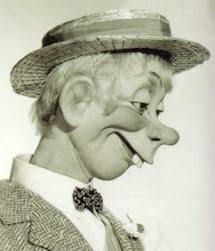
Another name mentioned as a possible source of the word is Mortimer Snerd — Edgar Bergan’s ventriloquist’s dummy modeled on a country bumpkin. The thought is that Snerd reminded radio listeners of a “drip” or someone looked upon as annoyingly dull. Edgar Bergan’s radio show was popular in the late 1930s through the 1950s and some think that Dr. Seuss had Snerd in mind when he wrote the rhyme — of course, there is no proof of that.

Another idea is that nerd developed in colleges from knurd — a coinage formed by spelling drunk backwards. The implication is that a “knurd” would rather study than party.

Gradually, the “socially inept but brainy” connotation became associated with the term. By the 1980s, the image of the nerd as someone who has a knack for computers and sports a “nerd pack” (a plastic penholder) in his shirt pocket and unsightly glasses came into being.

Even though, the subject of this entry is “nerd,” there is a a closely associated term, “geek.” For the sake of completeness, I should probably touch on that….
The term originally was used to describe sideshow freaks in the circus. It was typically attributed to those circus performers who were known for doing crazy things like biting off the heads of various small live animals or eating live insects and things like that.These performances were often called “geek shows.” The word itself, “geek,” came from the word “geck,” which was originally a Low German word which meant someone who is a “fool/freak/simpleton.”

Today, being labeled a nerd is something often worn with pride. It’s a word that implies that a person possesses a depth of knowledge in a particular area, whether it’s in science, books, words, gaming, or whatever. Today a nerd is brainy and a bit geeky, but that’s pretty cool.
— 30 —

Posted in Uncategorized | Leave a comment

Trust Me — it’s an “E”

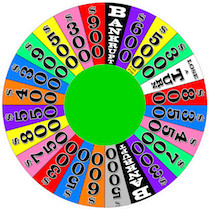
The other evening Wheel of Fortune came on TV and I watched it for a few minutes. It’s a word guessing game and I suspect that the people that play it and are good at it, are knowledgeable of the frequency in which letters are used in the English language. It always amazes me that sometimes some of the players don’t seem to have a clue. The other night a three letter word had a “T” and an “H” showing and the contestant said they’d like to buy a vowel — they bought an “E.” Now if it’s a three letter word “TH(blank)” — you don’t need to spend your money buying a vowel. The word is “THE!” Guaranteed.

Well anyhow I decided to do some extensive research as to what letters occur most frequently in our language, and I came up with something surprising, or maybe not so surprising….
The most commonly used letter in the English language is “e.” The most common consonant is “t,” and the most common second letter in a word is “h.” Now for the surprising, or maybe not surprising part — the most common popular word in the English language is “the.”

I think I’m ready to apply for that game show…. and I won’t be wasting my money to buy a vowel if two of the three letters in a word are T and H.
— 30 —

Posted in Uncategorized | Leave a comment

Punishment At Sea

A few days or weeks ago, I discussed the pirates of the Great Lakes in response to a question asked by one of our nieces. Some of you know that one of my favorite days is Talk Like A Pirate Day, and that I’ve alway been fascinated with pirates. Unfortunately a lot of the “colorful” things that pirates did and said, simply turn out to not be true, or at least not as romantic and adventuresome  as we wish they were.

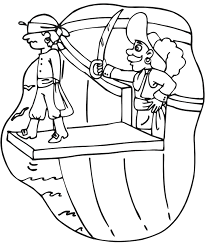
For instance, walking the plank… we’ve all seen movies where the blindfolded captive, prodded at cutlass-point is forced out onto a narrow board dangling over the sea — pirates must have done this, don’t you think? Actually, there is no proof that swashbucklers ever made their enemies and victims walk the plank. 

One of the earliest definitions of the phrase “walking the plank” appears in the 1799 book A classical Dictionary of the Vulgar Tongue, which explains it as “a mode of destroying devoted persons or officers in a mutiny on ship board.” 
Daniel Defoe who wrote Robinson Crusoe, was the first English writer to make his characters walk the “plank.” In his book A General History of Pyrates, he described ancient swashbucklers in the Mediterranean running a ship’s ladder out over the waves and telling their Roman captives they were free to go, so long as they were willing to swim for it.

In the 1800s, writers like Charles Ellms and Robert Louis Stevenson turned the ship’s ladder into “the plank.” Ellis’ book The Pirate’s Own Book included the drawing of a prisoner tumbling off the “death plank” into the sea. In 1887, Howard Pyle’s dramatic painting of “walking the plank” for a Harper’s Weekly article turned the plank into a visual icon that inspired all the pirate storytellers to come.

Most historians conclude that, while plank-walking did exist, it was relatively rare. If pirates did need to get rid of someone, it was much faster to simply push them overboard rather than set up a plank and have them do it themselves. In those rare instances when pirates had people walk the plank, it was probably simply because the pirates did it to amuse themselves on those occasions when there was time for it.
Another interesting theory as to why people were made to walk the plank was that the pirates couldn’t be tried for murder — after all the people walked off the plank themselves. This theory doesn’t hold much water though, because pillaging and piracy were generally hanging offenses anyway, so if they were caught, a murder charge on top of everything else wouldn’t make much of a difference. 
But actually, I kind of like this theory — from what I can determine from my extensive research, no records exist of charges being brought against anyone who forced people to walk the plank, so maybe those old scalawags were on to something….
— 30 —

Posted in Uncategorized | Leave a comment

Spring

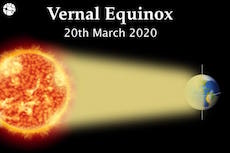
The first day of spring will officially occur this morning —  Sunday, March 20, 2022 at 11:33 a.m. EDT (in the Northern Hemisphere.) That date and time is the arrival of the Vernal (Spring) Equinox.

Traditionally, the first day of spring has ben celebrated on March 21, but the astronomers and calendar makers now say that the spring season starts on March 20th, in all time zones in North America. In case you’re interested, back in 2020 spring fell on March 19th — the earliest first day of spring in 124 years….

Every year I usually talk about the equinox and often get into the debate as to whether eggs and brooms can stand alone, but this year I’ll just stick to the equinox itself and the fact that it marks the official start of the spring season.

Vernal translated to “new” and “fresh,” and equinox is derived from the Latin aequus (equal) and nox (night.) That basically means that our hours of daylight — the period of time each day between sunrise and sunset — have been growing longer each day since the winter solstice in December. The days start getting longer after December 21st and the vernal equinox marks the turning point when daylight begins to win out over darkness.

There’s always some confusion between equinoxes and solstices. Seasons are caused by the Earth having a slight tilt on its axis. As the Earth wobbles around the Sun, different points of the Earth receive more or less sunlight throughout the year. If the Earth wasn’t tilted, the Sun would just shine directly on the Equator all year long and we’d have no seasons.

Solstices designate the point where the Sun’s path in the sky is the farthest north or south from the Equator — that occurs around the 20th and 21st of June and the 21st and 22nd of December. The summer solstice is the longest day of the year and the winter solstice is the shortest day of the year.

The equinoxes are when the Sun is right over the equator. They occur around March 21st and September 23rd and mark the beginning of spring or autumn. We call the beginning of spring the vernal equinox and the beginning of autumn is the autumnal equinox. You just have to remember that solstices are the longest and shortest days of the year and equinoxes mark the times when the day and night are equally as long. 

Some people are more connected to the Earth than others and these events take on a deeper spiritual meaning…. many believe the equinox is the period of struggle between darkness and light, death and life. They believe that the equinox is definitely the best period of the year to focus on some new projects, or get rid of something which doesn’t serve us anymore and to find the balance we need in life. Their belief that the Spring Equinox is physically, emotionally and spiritually a special time of energetic opportunity certainly seems like a good time to celebrate to me — not to mention the fact that winter is finally in the rear view mirror.
— 30 —

Posted in Uncategorized | Leave a comment

Democracy

I’m not sure why, but a few days ago I got an e-mail from someone that lives in our neighborhood. I didn’t recognize the name, so it must have come from one of the newer residents. But for some reason the e-mail was only addressed to 5 or 6 people — all residents of Deerfield Village. Why my name was chosen, I have no idea.

Anyhow, the text started out with “It’s a good thing I’m not calling the shots. The minute Putin sent his military across the Ukrainian border, I would have sent U.S. troops, tanks, jets, submarines, aircraft carriers….” Well, anyhow, you get the idea.

I’ve been a lot of places in the world during some pretty stressful times and I’ve never seen a situation where the solution is to “bomb the s***” out of someone or some place. This type of talk is “bar talk” — something you and your buddy say to each other while having a couple of beers at the bar. 

It seems like in the past few years I’m hearing more and more talk like this and it appears most people in the world (and the United States, especially) are ticked off about something, and often about pretty insignificant stuff. I’m not sure anyone under the age of 50 has ever bothered to read the Constitution and a lot of people seem to have lost sight as to what democracy is all about.
Winston Churchill once said, “The best argument against democracy is a five-minute conversation with the average voter.”
I’m thinking Winston may have been right….
— 30 —

Posted in Uncategorized | Leave a comment

John

Shortly after we moved to Shepherdstown and had settled on St. Agnes as our church of choice, one Saturday evening we sat down by a distinguished looking gentleman and I asked if this was the “sinners pew.” He smiled and said it was and that we were welcome to sit there. That distinguished gentleman was John King. 

As soon as Mass ended, he said, “it was nice to meet you, but I’ve got to go — my dog is sick.” I didn’t know it at the time, but John was the ultimate dog lover. That became apparent to me shortly after we had met…. one day after church, John had hurried out the door because he had to take care of his dog. His wife, Barbara, played the organ at church and she came by where we were standing and I said, “ so John left you on your own — he must think the dog is more important than you are.” Barbara said that was a much truer statement than I knew. She told me that John thought that if you’re not happy single, you won’t be happy married — that happiness comes from dogs, not relationships. We laughed about that occasionally, but the fact is John really did love dogs.

Over the years we had a number of discussions about whether or not dogs go to heaven. These were serious discussions — it was a very important subject to John. I grew up in Billy Graham country, and I remember that once he was asked if he thought there would be dogs in Heaven. His response was something like, “I think God will have prepared everything for our perfect happiness. If it takes my dog being there (in Heaven,) I believe he’ll be there.” From what I can tell, the Bible doesn’t address the issue —it neither confirms nor denies dogs in Heaven. Probably the best advice is for us to just love our pets and trust God in everything for the future.

But back to John…. there’s an old saying that in life, it’s not what you know, but who you know that counts. When I first heard that, I thought it was probably true — if you knew the right people, they could open doors for you and give you a leg up over your competition, etc. But as I’ve grown older but wiser (at least older) I still believe it’s true, but for different reasons. Who you know refers to people that you play golf with, have a beer with, laugh with, cry with, celebrate with you when you’re happy, console you in times of trouble, make you happy when you’re with them — they’re the people that count — they’re your friends. John was one of those “who’s” in our lives. Friends are like the family you choose and losing a good friend like John is like losing a family member…. leaving us to grieve his passing with the memories he gave, the good that he did and our time together. 
I’ve heard it said that our friends never truly leave us — there are things that death can’t touch.

I never liked the idea of mourning death — I think it’s much better to celebrate the life of the person gone. So today, on this St. Patrick’s Day, my thoughts are simple — John will be missed. His family, friends, Shepherd and St. Agnes have lost a dear friend. Go in peace John, you’ve earned your sleep. And as the Irish might say — until we meet again, may God hold you in the palm of his hand.
— 30 —

Posted in Uncategorized | Leave a comment

St. Pat

Today is the day they say everyone is Irish — St. Patrick’s Day. If times were normal — meaning pre-pandemic — more than half (52%) of Americans plan some type of celebration on St. Patrick’s Day, and more than 82% of those celebrating will wear green. Billions (that’s a “B”) of dollars are typically spent on clothing, flags, green carnations, dining — and — beer.

We all know that March 17 isn’t St. Patrick’s birthday, it’s the day he died. He was born in 385 AD, but no one knows what day. We also know that he wasn’t born in Ireland. His parents were Romans living in England. We also know that he was never canonized  by the Catholic Church and he never drove all the snakes our of Ireland. 
Construction of New York’s St. Patrick’s Cathedral was begun in 1858, but construction was halted by the Civil War. The cathedral is located in an area now known as Midtown, but at the time, was far north of most of the population of Manhattan.
New York’s St. Patrick’s Day Parade is the country’s oldest and largest parade — it began 14 years before the Declaration of Independence was signed.
Irish ancestry ranks second to only German among nationalities of Americans with European ancestry. 

So we know a lot about St. Patrick and his day and it does’t bother us at all if everything we’ve heard over the years isn’t exactly true or accurate. Between their blessings, sayings, toasts, and proverbs, the Irish certainly know a thing or two about catchy, humorous, encouraging, and wise statements. Another of my favorites….
Always remember to forget
The things that made you sad.
But never forget to remember
The things that made you glad.
Happy St. Patrick’s Day!! 
— 30 —

Posted in Uncategorized | Leave a comment

The Ides

I know — I’ve talked about this before, but it’s kind of becoming a tradition that I discuss the Ides of March every year when it comes around. So you probably won’t be learning anything new — if you want to just skip todays reading, I’ll understand.

On the Roman calendar, the midpoint of every month was known as the ides. So the Ides of March was just a single day on the Roman calendar, and even though “ides” is plural, it denotes only a single day that happens to fall in the middle of the month. Ides were just a name give to a division of the month and every month had its ides. 

But thanks to Shakespeare and his play Julius Caesar, the ides, and specifically, the Ides of March, have become associated with bad luck. The famous words from the play, “beware the ides of March,” never meant that the Ides of March itself was, or is, sinister. The words only referred to a normal day on the Roman calendar.

If you’ve read Julius Caesar, you know that Caesar died because some senators thought he desired too much power and they thought they would save the republic by doing him in. Again, it didn’t exactly work out the way they planned… so I’m not sure about the current cast of politicians, but if you’re not one of them, the ides of March will probably feel like any other day of the month.
— 30 —

Posted in Uncategorized | Leave a comment